Browse audiobooks narrated by Steve Knupp, listen to samples and when you're ready head over to Audiobooks.com where you can get 3 FREE audiobooks on us
I’m The Everest: No hands. No limits
"'I'm the Everest' is the remarkable memoir of Sudarshan Gautam, a man who transformed unimaginable loss into extraordinary courage. Born in a remote village in Nepal, Sudarshan’s early life was shaped by the beauty and hardship of his surroundings, the guidance of his father, and the unwavering love of his mother. Life in the village taught him the value of resilience, respect, and community, laying the foundation for the trials that would come. Everything changed the day a tragic accident cost him both hands. The incident thrust him into a world of uncertainty, pain, and societal doubt. Through lengthy hospital stays, grueling recovery, and moments of despair, Sudarshan discovered a strength he never knew he possessed. With patience, discipline, and sheer determination, he learned to navigate life using his feet, reclaiming independence in tasks most take for granted. This memoir is more than a story of overcoming physical limitations. It is a testament to human perseverance, the depth of parental love, and the dignity of self-belief. Sudarshan’s journey challenges perceptions of disability and reveals the power of hope, adaptability, and courage. 'I'm the Everest' invites readers to witness a life that rises above loss, fear, and doubt. It is a moving reminder that true strength is found not in what we have, but in how we confront life’s greatest challenges and rise beyond them."
Sudarshan Gautam (Author), Steve Knupp (Narrator)
Audiobook
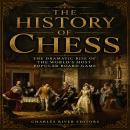
The History of Chess: The Dramatic Rise of the World’s Most Popular Board Game
"On the afternoon of May 11, 1997, in a television studio on the 34th floor of a building in midtown Manhattan, one of the strongest chess players in history sat down to play the sixth and final game of a match he had expected to win. Garry Kasparov was 34 and had held the world championship for 12 years, making his name a synonym for the human mind operating at the absolute edge of its power. Across the board from him sat an opponent with no mind at all. The opponent was a black tower of processors built by IBM and named Deep Blue. It did not sit, because it could not sit - it was represented at the board by a quiet engineer who moved the pieces on its behalf. It calculated roughly 200 million positions per second and could not grow tired across a long session. It is tempting to treat that afternoon as the climax of chess history, the moment the game arrived at its final destination. But perhaps it is better understood as a single frame in a far longer film, one that began roughly 15 centuries earlier and half a world away, on the plains of northern India, where the game did not yet carry a name recognizable to modern societies and the pieces stood not for bishops, queens, and rooks, but for elephants, chariots, and foot soldiers. The history of chess is, in a true sense, a history of globalization. No other game has crossed so many borders, come in so many variations, or worn so many costumes. It was carried out of India by merchants and diplomats, adopted by the Persian nobility, reshaped by the scholars of Islam, smuggled into Christian Europe along three separate roads, denounced from the pulpit and then preached from it, transformed in a single Spanish generation into something fast and dangerous, refined into a science by a stubborn theorist in the 19th century, made into a political and propagandist instrument of state by the Soviet Union, and at last carried into the circuitry of a machine that beat the best."
Charles River Editors (Author), Steve Knupp (Narrator)
Audiobook
"On the night of April 1, 1951, in six republics along the western edge of the Soviet Union, soldiers moved into villages and towns while the people inside their houses slept. They came with dogs and machine guns, and they carried lists on which names and addresses had already been written. The lists had been compiled over the preceding months by the Ministry of State Security, the agency the Soviets called the MGB. The men knocked, and when the doors opened, they read out an order. The order dictated that the family in front of them was being resettled, and the most important word in the documents was navechno, meaning forever. The families on those lists were Jehovah’s Witnesses, and over the span of two days in the western republics, and a week later across Ukraine, Soviet security forces seized 9,793 people, loaded them into freight cars built for transporting cattle, and sent them east into Siberia. The MGB called it Operation North, and it ended up being the largest deportation of a single religious group in the history of the Soviet Union, carried out on the direct order of Joseph Stalin. The Jehovah’s Witnesses were dispersed across the special settlements of Tomsk Oblast, Irkutsk Oblast, and Krasnoyarsk Krai, regions of forest and deep cold where the planners believed a small foreign faith could be left to die out among strangers. The families arrived to find snow still on the ground in late April, and many spent the first winter in shelters they dug into the earth, keeping themselves alive on nettles and the inner bark of trees. Of course, some had already died in the railcars, and others died in the initial months after their arrival. The bare facts of the operation are striking enough on their own, but they sit within a larger irony that gives the story its shape. The Soviet state was an ascendant empire that had crushed far greater enemies than a few thousand pacifist believers, but it ended up proving unable to break the Jehovah's Witnesses. "
Charles River Editors (Author), Steve Knupp (Narrator)
Audiobook
"When Liam Treadwell walks into a lawyer's office expecting to sign a few simple papers, he never imagines that a single envelope will change the course of his life forever. A surprise inheritance worth millions doesn't just come with wealth-it carries expectations, buried memories, and emotional baggage he thought he'd left behind. What follows is a powerful journey through grief, healing, and second chances. 'Dawn's Breaking Light' is a heartfelt story that unfolds through moments of unexpected fortune, painful loss, and the kind of personal growth that only comes from facing the past head-on. As Liam wrestles with his doubts and memories of childhood trauma, the scars left by 9/11, and the loss of his mother, he begins to see that money alone can't fix what's broken inside. With the support of those who love him and the ghosts that still visit him in dreams, he slowly finds his footing in a world he never imagined for himself. This is a story about family, resilience, and what it truly means to start over. Glenn Blekicki brings warmth, honesty, and emotional depth to this unforgettable novel that reminds us how life can change in an instant-and how we carry those changes with us, whether we're ready or not."
Glenn Blekicki (Author), Steve Knupp (Narrator)
Audiobook
"'THE SECRET CODE OF PADEL: Business and Life Lessons on Achieving the American Dream with the Fastest Growing Sport in the World' by Marcos del Pilar is a true story of vision, grit, and the drive to create something extraordinary. Over nine years in America, Marcos built a flourishing industry around Padel, the sport capturing hearts worldwide. In these pages, he shares not only his personal journey but also the ideas and principles that helped him turn challenges into opportunities. From his early days as an entrepreneur to becoming a leader in the Padel movement, Marcos reveals lessons in resilience, innovation, and believing in yourself even when the odds are long. Readers will find practical advice on how to grow Padel in new markets and what it takes to run successful facilities that bring people together. But this book is more than a business guide—it’s an invitation to pursue your passions and push past limits. 'THE SECRET CODE OF PADEL' is a reminder that ambition, hard work, and a clear purpose can open doors to a brighter future. As Marcos likes to say, everything is possible, the future is bright, and it’s right in front of us. VAMOS!"
Marcos Del Pilar (Author), Steve Knupp (Narrator)
Audiobook
Belle Gunness: The Life and Legacy of America’s Most Notorious Female Serial Killer
"There was a farm outside La Porte, Indiana, that no longer exists. The buildings burned to the ground on the morning of April 28, 1908, but what the fire left behind was a cellar full of horrors that the people of La Porte and the country at large spent the better part of that spring trying to comprehend. Investigators found the remains of several bodies that had been dismembered, wrapped, and buried with the kind of efficiency that suggested someone had done the work many times before. Remains were found in the cellar, the yard, and in the hog pen, and every time authorities believed they had found everything, they found more. The case of Belle Gunness is one of the most extraordinary in the history of American crime in ways that go beyond the staggering body count. It is astonishing because of who she was and how she operated as a Norwegian immigrant widow who understood, with a clarity that bordered on genius, the particular loneliness of immigrant men far from home. For reasons that can only be speculated, she weaponized that understanding to create a murder operation that ran for years in a quiet Indiana town without attracting the kind of attention that should have been impossible to avoid. The case is also extraordinary because the question of whether Gunness died in that fire could not be resolved by a 2007 DNA test, so the case file is officially unsolved, even as modern investigators and historians occasionally returned to the La Porte farm and its ashes for more than a century. The story of how a girl born into poverty in a Norwegian fishing village became the most prolific female serial killer in American history, and how she may or may not have gotten away with all of it, began with a boat, the ocean, and the grisly determination that the life she was born into was not the life she intended to keep."
Charles River Editors (Author), Steve Knupp (Narrator)
Audiobook
The Beautiful Game, as Seen from My Angle
"'The Beautiful Game, as Seen from My Angle' by Carlos Murcia is a personal journey through a lifelong passion for soccer. From the streets of El Salvador to stadiums in the United States, Carlos shares how the sport shaped his childhood, connecting him with family, friends, and his cultural roots. His early experiences playing barefoot in neighborhood games capture the joy and freedom soccer brought to his life. As he grows, Carlos reflects on the evolution of his fandom, from watching matches with his grandfather to discovering iconic players and joining the global community of FC Barcelona supporters. He recounts pivotal moments, including the excitement of witnessing Lionel Messi's debut and following the rise of Inter Miami, a team that became central to his experience of soccer in America. Soccer becomes more than a game; it is a lens through which he understands loyalty, connection, and personal identity. The book also explores the challenges of passion, including conflicts with friends, the intensity of rivalry, and the lessons learned in balancing devotion with life outside the sport. The Beautiful Game, as Seen from My Angle celebrates soccer's power to inspire, teach resilience, and foster meaningful connections. It is both a memoir and a reflection on how one sport can shape a lifetime."
Carlos Murcia (Author), Steve Knupp (Narrator)
Audiobook
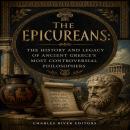
The Epicureans: The History and Legacy of Ancient Greece’s Most Controversial Philosophers
"Although the school of philosophy started by Socrates and championed by Plato and Aristotle continues to be the most famous, other schools of thought began to branch, including the Epicureans and Cynics. In the 3rd century B.C., Stoicism arose in response to and under the influence of these older schools, combining many of the best theories from each into a more cohesive whole. With a greater flexibility and more practical application to everyday life, Stoicism quickly became a very popular school of thought, a growth made exponential by its introduction to the Romans. The Stoics weren’t the only ones who challenged Epicureans, because few philosophical schools in the ancient world were as controversial. To their enemies, the Epicureans were essentially hedonistic heretics, making them enemies of traditional morality whose teachings threatened the social and religious foundations of Greek civilization. To their admirers, however, the Epicureans represented one of antiquity’s most rational philosophical movements, offering ordinary people a path toward happiness, peace of mind, and freedom from fear. Though often remembered today merely for the modern word “epicurean,” which has become associated with luxurious food and refined tastes, the actual philosophy of Epicureanism was far more complex and intellectually ambitious than simple indulgence. At its heart, Epicureanism sought to answer life’s most pressing issues, namely how to achieve happiness and pleasure while avoiding physical pain and mental anguish in a world of uncertainty. To offer answers, Epicurus founded his philosophical school in Athens around 306 B.C. during one of the most turbulent periods in Greek history. The Classical Era was gone, replaced by the vast kingdoms created after the conquests of the Macedonians, and traditional political life had become unstable, warfare remained constant, and many Greeks experienced growing uncertainty about religion, identity, and the future."
Charles River Editors (Author), Steve Knupp (Narrator)
Audiobook
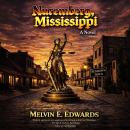
"In 1965, in a small Mississippi town where order is prized and rules are followed without question, a man waits for a bus. What happens next seems routine -- an arrest, a charge, a trial conducted according to the law. The paperwork is complete. The procedures are correct. The officials involved believe they are simply doing their jobs. But beneath the surface of professionalism and politeness lies a deeper question: What happens when the law itself becomes the instrument of injustice? Nuremberg, Mississippi follows Attorney Silas Thomas Thorn III, a man who has built his life on the belief that predictability is fairness and that the stability of the legal system depends on obedience to established rules. When a seemingly minor case begins to expose contradictions within that system, Thorn is forced into a moral reckoning that challenges everything he has trusted-his training, his community, and his own sense of duty. As the proceedings unfold, the town's institutions -- courts, law enforcement, civic leaders, and ordinary citizens -- move forward with quiet confidence. No one raises their voice. No one breaks the rules. Yet step by step, the machinery of justice produces an outcome that feels increasingly difficult to defend. Drawing inspiration from the moral questions raised during the post-World War II Nuremberg trials, the novel examines how harm can emerge not from hatred or malice, but from routine decisions made by reasonable people acting within a system designed to appear fair."
Melvin E. Edwards (Author), Steve Knupp (Narrator)
Audiobook
H.H. Holmes: The Notorious Life and Crimes of America’s First Serial Killer
"Herman Webster Mudgett was born in 1861 in a small New Hampshire hill town, and he was dead before he turned 35. In the years between, operating under a name he had constructed to replace his own, he built a hotel in Chicago designed to kill its guests, committed a number of murders whose exact count remains in dispute, and earned the distinction of being among the first Americans to whom the word “serial killer” - a term that did not yet exist in his lifetime - could reasonably be applied. He is remembered most often for his actions during the 1893 World’s Columbian Exposition, which brought 26 million visitors to Chicago and provided him with his largest concentration of potential victims. The shadow he cast over that celebration - a gleaming white city of plaster and electric light that rose from the swampy lakefront and lasted six months before being dismantled - has made him a figure of American legend as much as American history. Erik Larson’s 2003 book The Devil in the White City introduced Holmes to a generation of readers, and the interest has not dimmed since. Perhaps not surprisingly, the legend has not always been a reliable account of history. His crimes were methodical, deliberate, and systematic in their logic, more like cold engineering than a gothic nightmare. The building he erected on 63rd Street in the Englewood neighborhood of Chicago's South Side had gas pipes running into the walls of bedrooms and doors that could only be locked from the outside. It was the physical reflection of a mind that had decided, with the same clear-eyed pragmatism he applied to all problems, that certain people were worth more to him dead than alive. Put simply, he was not driven by rage or impulse, but he was a systematic thinker and killer."
Charles River Editors (Author), Steve Knupp (Narrator)
Audiobook
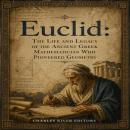
Euclid: The Life and Legacy of the Ancient Greek Mathematician Who Pioneered Geometry
"Of the many mathematical advances made by the Greeks, none rival those established by Euclid of Alexandria, who likely remains the most famous ancient mathematician despite the fact little is actually known about his life. He revolutionized geometry, mathematics, and astronomy in Alexandria, Egypt, around 300 BCE, yet left almost no clues about his life story. Historians know he was a trailblazing mathematician and dabbled in astronomy because he wrote many books on these topics, and a 13-book treatise of his has survived, along with four other books. Thus, it’s clear what Euclid learned and knew, but virtually nothing is known about how his life unfolded or what he was like as a person. To this day for many students, geometry class was the first time discovering that mathematics is more than calculating numbers. Some may have expected to study shapes, sizes, positions, and the properties of space, but perhaps for the first time, a geometry class required proving why the calculations were true through rigorous, logical arguments using definitions, postulates, and theorems. For countless students, it is excruciating, while others find it fascinating. Either way, the person to thank (or blame) for that is Euclid. Often called the “Father of Geometry,” Euclid’s influence is so pervasive that his book, The Elements, was the primary math manual for over 2,000 years. It was not a “textbook” in the modern sense, as it did not have problem sets, word problems, or diagrams for practice, but it was a foundational reference and logical guide that students had to read, memorize, and demonstrate. In both the Western and Islamic worlds, Euclid’s Elements was the standard geometry text for almost every educated person until the 19th century."
Charles River Editors (Author), Steve Knupp (Narrator)
Audiobook
2040: Is This the End We Want?
"2040 is a dystopian warning and deliberate prequel to the companion novel 2084. Where 2084 explores a future shaped by thoughtful integration between humanity and artificial intelligence, 2040 reveals what happens when power, fear, and unchecked systems determine the path forward instead. This is the future we do not want. The story traces the years leading to 2040, as democratic institutions erode, surveillance becomes normalized, and technology shifts from innovation to enforcement. Authority tightens. Extremism spreads. Economies fracture. Citizens comply not through force, but through convenience, loyalty, and fear. Freedom survives as language, but disappears in practice. Artificial intelligence is not the villain here. Like in 2084, it is a tool. The danger lies in who controls it and why. Systems designed to protect become mechanisms that monitor, restrict, and punish. Resistance is reframed as risk. This book is intentionally unsettling because it is plausible. Its events echo debates already unfolding worldwide. This is the dark trajectory. Read it first. The possible alternate ending appears in the hopeful companion book: 2084. What if there’s another path? Discover it in 2084, where humanity chooses ethics, restraint, and shared responsibility over domination, obedience, and control of its own future at last now."
Howard Atkins (Author), Steve Knupp (Narrator)
Audiobook

©PTC International Ltd T/A LoveReading is registered in England. Company number: 10193437. VAT number: 270 4538 09. Registered address: 157 Shooters Hill, London, SE18 3HP.
Terms & Conditions | Privacy Policy | Disclaimer
Join our community for the latest bookish news, reading recommendations, exclusive opening extracts, author events and competitions. It\'s all free. And enter a monthly draw to win a £50 Gift Card. See past winners here
Join Our Community