Browse audiobooks narrated by Michelle Humphries, listen to samples and when you're ready head over to Audiobooks.com where you can get 3 FREE audiobooks on us
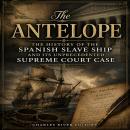
"By the early 19th century, several European nations had banned slavery, but while the United States had banned the international slave trade, slavery was still legal in the country itself. As a result, there was still a strong financial motive for merchants and slave traders to attempt to bring slaves to the Western hemisphere, and a lot of profits to be gained from successfully sneaking slaves into the American South and the Caribbean by way of locations like Havana, Cuba. At the same time, the cruelties of the slave trade often led to desperate attempts by slaves or would-be slaves to avoid the horrific fate that they were either experiencing or about to face. In 1831, Nat Turner’s revolt shocked the South and scared plantation owners across the country, while also bringing the issue of slavery to the forefront of the national debate, and the mutiny on the Amistad is still taught in American schools today. Less than 20 years before the mutiny on the Amistad, another Spanish slave ship was at the center of a dramatic legal case in the United States, this time involving privateers. The Antelope was a slave ship that plied the waters in the Western hemisphere after the international slave trade had been banned, making it a potential prize not just for crews looking to trade illicit human cargo, but also for those who hunted slave ships themselves. The name of the ship that captured the Antelope changed at least four times in less than two years, (as well as the flag under which it flew), and the Antelope’s name also changed after pirates captured it. The legal cases for both ships proceeded all the way up to the United States Supreme Court, which eventually ruled that most of the Africans be returned home as free men, but not before the British and Spanish used diplomatic and political leverage to try to influence the outcome. Ultimately, the rebellion on the Amistad became a watershed moment in the debate over slavery and abolition in America. "
Charles River Editors (Author), Michelle Humphries (Narrator)
Audiobook
The Antelope: The History of the Spanish Slave Ship and Its Unprecedented Supreme Court Case
"By the early 19th century, several European nations had banned slavery, but while the United States had banned the international slave trade, slavery was still legal in the country itself. As a result, there was still a strong financial motive for merchants and slave traders to attempt to bring slaves to the Western hemisphere, and a lot of profits to be gained from successfully sneaking slaves into the American South and the Caribbean by way of locations like Havana, Cuba. At the same time, the cruelties of the slave trade often led to desperate attempts by slaves or would-be slaves to avoid the horrific fate that they were either experiencing or about to face. In 1831, Nat Turner’s revolt shocked the South and scared plantation owners across the country, while also bringing the issue of slavery to the forefront of the national debate, and the mutiny on the Amistad is still taught in American schools today. Less than 20 years before the mutiny on the Amistad, another Spanish slave ship was at the center of a dramatic legal case in the United States, this time involving privateers. The Antelope was a slave ship that plied the waters in the Western hemisphere after the international slave trade had been banned, making it a potential prize not just for crews looking to trade illicit human cargo, but also for those who hunted slave ships themselves. The name of the ship that captured the Antelope changed at least four times in less than two years, (as well as the flag under which it flew), and the Antelope’s name also changed after pirates captured it. Hundreds of Africans destined for a lifetime of slavery were on the ship when it was captured. They had been taken from their families and villages in Africa, then marched overland by cannibalistic warlords. After being sold on the beach, they were forced into the hold of a ship and endured rough seas, pirates, and shipwreck. Dozens died on the voyage, and when their ship was captured, nobody knew what to do with them. "
Charles River Editors (Author), Michelle Humphries (Narrator)
Audiobook
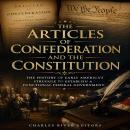
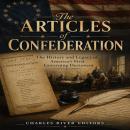
"Of all the celebrated documents in American history, one of the relics of history is the Articles of Confederation, which have been reduced to a footnote. In fact, Americans often overlook the years between the negotiation of peace in 1783 and the drafting of the Constitution in 1787, but to understand the Constitution, it’s necessary to understand why it was drafted in the first place. After the Revolution, the new United States attempted to operate under the Articles of Confederation, which had been drafted in a time of war by men who were wary of Parliamentary abuses of power. Given that context, it should not be surprising that the national government the Continental Congress crafted during the Revolutionary War was particularly weak. During the war itself, the reason Congress could not pay the soldiers in the Continental Army was because it did not have the power to tax. General George Washington pestered the Continental Congress for provisions constantly, but they could only ask for money from the states. By 1787, it became evident that the Articles of Confederation were inadequate for the new nation. With these problems hampering the national government under the Articles of Confederation and the threat of default on the nation's massive war debt looming, plans began being made to fix the problems of the Articles of Confederation. Thus, that summer a Constitutional convention was called, and each state sent delegates to Philadelphia. Among the delegates were prominent patriots and former members of the Continental Congress, including George Washington and Benjamin Franklin. The Constitution was a decisive move away from the Articles of Confederation, which the proponents of the Constitution claimed promoted dissonance by giving states too much autonomy. They argued that a strong federal government ought to be empowered to maintain standing armies, provide for a national militia, and be able to levy direct taxes to support defense and provide prosperity."
Charles River Editors (Author), Michelle Humphries (Narrator)
Audiobook
The Articles of Confederation: The History and Legacy of America’s First Governing Document
"Around the very same time that Congress was drafting the Declaration of Independence, it also had a committee drafting a constitution for the United States. The committee was led by John Dickinson, who presented the committee's conclusion on July 12, 1776. Drafting the document was no easy task: as with the writing of the Declaration of Independence, the individual states were often reluctant to hand sovereignty over to a greater confederate power. After the Revolution, the new United States attempted to operate under the Articles of Confederation, which had been drafted in a time of war by men who were wary of Parliamentary abuses of power. Given that context, it should not be surprising that the national government the Continental Congress crafted during the Revolutionary War was particularly weak. During the war itself, the reason Congress could not pay the soldiers in the Continental Army was because it did not have the power to tax. General George Washington pestered the Continental Congress for provisions constantly, but they could only ask for money from the states. The drafters of the Articles of Confederation had deliberately avoided giving the national legislature the power to tax because Parliament had so abused that authority against the colonies, but it didn’t take long for this to be a severe limitation on the national government. Besides hampering the Continental Army, the inability of the national government to raise revenue made foreign policy difficult. After the end of the Revolutionary War, the United States had no navy and was no longer protected by the British navy. As a result, American commerce was pillaged by the Barbary pirates, yet the Congress could do nothing to stop the pirate attacks because it could raise no money to fund a navy to defend American shipping. Ultimately, the Constitution was a decisive move away from the Articles of Confederation, which the proponents of the Constitution claimed gave the states too much autonomy. "
Charles River Editors (Author), Michelle Humphries (Narrator)
Audiobook
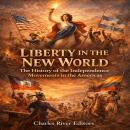
Liberty in the New World: The History of the Independence Movements in the Americas
"Hispaniola entered the European record in 1492 when Christopher Columbus made landfall on its southern shore during his first trans-Atlantic voyage, and he named his discovery in honor of the Spanish Crown that had funded and sponsored the voyage. Leaving the crew of the wrecked Santa Maria on the island, he returned to Europe, leaving his men to establish the foundations of the settlement of La Navidad and the first beachhead of the European seizure of the Caribbean and the New World. Columbus would revisit the island three times, leading a vanguard of pioneer colonists to commence the exploitation of the New World. Thus, even by the 16th century, slaves were being imported to Hispaniola, and over the next few centuries, the population of African slaves came to represent a sizable majority of the population there. This would set the stage for one of history’s most unique revolutions. The American Revolution is replete with seminal moments that every American learns in school, from the “shot heard ‘round the world” to the Declaration of Independence, but the events that led up to the fighting at Lexington & Concord were borne out of 10 years of division between the British and their American colonies over everything from colonial representation in governments to taxation, the nature of searches, and the quartering of British regulars in private houses. From 1764-1775, a chain of events that included lightning rods like the Townshend Acts led to bloodshed in the form of the Boston Massacre, while the Boston Tea Party became a symbol of nonviolent protest. By in the early 19th century, events transpiring back in Europe would make it possible for independence movements to spread across the New World, especially as the Spanish Empire teetered, and those events would make it possible for leaders like Simón Bolívar to become the liberators across the Americas, reshaping the Western hemisphere in ways it still resembles today."
Charles River Editors (Author), Michelle Humphries (Narrator)
Audiobook
From Revolution to Republic: The History and Legacy of the Founding of the United States
"The American Revolution is replete with seminal moments that every American learns in school, from the “shot heard ‘round the world” to the Declaration of Independence, but the events that led up to the fighting at Lexington & Concord were borne out of 10 years of division between the British and their American colonies over everything from colonial representation in governments to taxation, the nature of searches, and the quartering of British regulars in private houses. From 1764 - 1775, a chain of events that included lightning rods like the Townshend Acts led to bloodshed in the form of the Boston Massacre, while the Boston Tea Party became a symbol of nonviolent protest. The political and military nature of the Revolutionary War was just as full of intrigue. While disorganized militias fought the Battles of Lexington & Concord, George Washington would lead the Continental Army in the field while men like Thomas Jefferson drafted the Declaration of Independence in Philadelphia and Benjamin Franklin negotiated overseas in France. Benedict Arnold would become one of his nation’s most vital war heroes and its most notorious traitor, French forces would play a crucial role at the end of the war, and the Treaty of Paris would conclude the Revolution with one last great surprise. After the Revolution, the new United States attempted to operate under the Articles of Confederation, which had been drafted in a time of war by men who were wary of Parliamentary abuses of power. Given that context, it should not be surprising that the national government the Continental Congress crafted during the Revolutionary War was particularly weak. Thus, the Constitution would be a decisive move away from the Articles of Confederation, which the proponents of the Constitution claimed promoted dissonance by giving the States too much autonomy. They argued that a strong federal government ought to be empowered to maintain standing armies and be able to levy direct taxes."
Charles River Editors (Author), Michelle Humphries (Narrator)
Audiobook
"Given the abundance of funerary artifacts that have been found within the sands of Egypt, it sometimes seems as though the ancient Egyptians were more concerned with the matters of the afterlife than they were with matters of the life they experienced from day to day. This is underscored most prominently by the pyramids, which have captured the world’s imagination for centuries. The pyramids of Egypt are such recognizable symbols of antiquity that for millennia, people have made assumptions about what they are and why they exist, without full consideration of the various meanings these ancient symbolic structures have had over the centuries. Generations have viewed them as symbols of a lost past, which in turn is often portrayed as a world full of romance and mystery. This verbal meaning has become associated with the structures through the tourism industry, where intrigue obviously boosts ticket sales. In fact, the Egyptian pyramids are so old that they were also drawing tourists even in ancient times. In antiquity, the Great Pyramid of Giza was listed as one of Seven Ancient Wonders of the World, and it is the only one still surviving today. The age and structural integrity of the pyramids also make them symbols of longevity and power, which is only fitting because those are two purposes the ancient pharaohs who commissioned these works intended them to serve. For the pharaohs, the construction of these large monuments presented an opportunity for them to showcase their influence and become something to be remembered by, both in the society they ruled and in the annals of history that would follow. Even as new dynasties came and went, and even as Egypt was subjected to foreign domination and rulers from across the world, the pyramids have continued to stand as a prominent testament to ancient Egypt’s glorious past. "
Charles River Editors (Author), Michelle Humphries (Narrator)
Audiobook
"William the Conqueror’s conquest of Britain arguably made him the most important figure in shaping the course of English history, but modern caricatures of this vitally important medieval figure are largely based on ignorance. William is a fascinating and complex figure, in many ways the quintessential warrior king of this period. Inheriting the Duchy of Normandy while still an infant and forced to fight for his domain almost ceaselessly during his early years, William went on to conquer and rule England, five times larger and three times wealthier. In doing so, he demonstrated sophisticated political and diplomatic skill, military prowess and administrative acumen. Although he lived by the sword, he was a devout man who had only one wife, to whom he remained faithful. William is one of history’s most famous conquerors, but the efforts to consolidate his rule in England were complicated from the start, both due to external enemies and those jockeying for his position while he was still alive. William ultimately decided to split Normandy and England. His son Robert, still in open revolt, would nonetheless inherit Normandy, while the next in line, his second son William, would rule England. The two states that William left behind were hardly united or at peace. Soon after his death, Odo conspired with Robert to oust his brother from the English throne and re-establish a united state, but the revolt failed, and King William “Rufus” II would rule England until his suspicious death in 1100. His younger brother Henry inherited the throne, and in 1106 he imprisoned Robert after their sibling battle at Tinchebray had achieved unity once more, but any political unity would not last long. This bloody era provides a fascinating glimpse into the lives, characters, and power struggles of the Norman-French nobility who had conquered England less than 100 years prior. "
Charles River Editors (Author), Michelle Humphries (Narrator)
Audiobook
"Though espionage is a hallmark of every major war, spies are often depicted in countless works of fiction as discovering secrets on which the fate of nations hang in the balance. Reality is generally rather more mundane, as spies often gather low-level intelligence that only makes sense when it is examined by analysts and compared to information from other sources. Espionage provides clues to what the enemy is planning, but on its own, it rarely changes the course of a war. Moreover, real spies are generally anonymous, not the bold, swashbuckling action heroes depicted in fiction. Spies must hide in plain sight, and that is best achieved by being as innocuous as possible. The most effective Union spy of the war was a Richmond spinster named Elizabeth Van Lew, who ran one of the most successful espionage networks from a mansion on Church Hill in the heart of the Confederate capital. She communicated directly with Ulysses Grant, and she smuggled intelligence out of Libby Prison using methods so varied and inventive that the Confederate authorities who suspected her never fully figured out how she was accomplishing it. She recruited a woman she had freed from enslavement to serve as a domestic servant in Jefferson Davis' own household, placing an observer at the nerve center of Confederate executive decision-making. She maintained these operations for four years under constant suspicion, in a city that had come to despise her, without ever being successfully indicted for the treason that every Confederate official in Richmond assumed she was committing. Van Lew’s story does not fit neatly into the categories that popular histories of Civil War espionage tend to favor. She simply started the war as a middle-aged woman who had inherited considerable wealth and unshakable convictions when it came to the necessity of abolishing slavery, and before the war had even started, she had made the conscious decision to do everything within her power to defeat the Confederacy."
Charles River Editors (Author), Michelle Humphries (Narrator)
Audiobook
Pauline Cushman: The Life of the Southern Actress Who Became a Union Spy during the Civil War
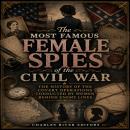
"Given the necessity of spies to hide in plain sight, on some level it is perfectly sensible that women played a larger and more decisive role in espionage operations, because during the Civil War, women were not taken seriously as threats. They openly moved through areas that men in uniform could not easily penetrate, and they were able to publicly receive callers, visit prisoners, manage households, carry on the ordinary commerce of social life, and cross lines that military authorities maintained without bringing any attention upon themselves. Ironically, both sides used several women as spies precisely because they drew less suspicion, yet neither the Union nor Confederates took potential women spies seriously. In some ways, Pauline Cushman was able to take advantage of the fact she was a woman, but unlike regular civilians who could blend in, she had the disadvantage of being a recognizable actress. Near the end of the war, she was photographed by Matthew Brady, who had documented the Civil War's battlefields, generals, and, most memorably, casualties. In the photograph, Cushman is wearing a military uniform with a sword at her side, and her gaze is fixed beyond the frame with the composed confidence of someone who had seen worse things than a camera. She was 31 at the time and had recently been sentenced to hang. By the time Brady pointed his lens at her, she was famous as the “Spy of the Cumberland,” making her the greatest heroine of the year. Major Cushman was a woman whose story was being told in newspapers from Boston to San Francisco with the breathless enthusiasm of a nation that needed heroes and found in her something it could not quite categorize. She had done a soldier's work, faced a soldier's death, and survived to tell. However, Cushman’s story was not just about being a spy, but also about what it cost to be a woman who wanted to be of use to her country in a time when her country had no official way to acknowledge her contribution."
Charles River Editors (Author), Michelle Humphries (Narrator)
Audiobook
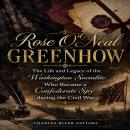
"Given the necessity of spies to hide in plain sight, on some level it is perfectly sensible that women played a larger and more decisive role in espionage operations, because during the Civil War, women were not taken seriously as threats. They openly moved through areas that men in uniform could not easily penetrate, and they were able to publicly receive callers, visit prisoners, manage households, carry on the ordinary commerce of social life, and cross lines that military authorities maintained without bringing any attention upon themselves. A woman bringing food and medicine to prisoners seemed to be a humanitarian, not a security concern, and a woman maintaining the social routines of an established household was a hostess, not an intelligence coordinator. Ironically, both sides used several women as spies precisely because they drew less suspicion, yet neither the Union nor Confederates took potential women spies seriously enough. At the start of the war, the most formidable of these women on either side of the conflict was a Washington widow named Rose O'Neal Greenhow. She was perfectly situated for espionage as a politically connected woman of extraordinary intelligence who had social reach and the desire to use every connection she had on behalf of a cause she believed in absolutely. In the first year of the war alone, she helped win a battle, ran a spy ring from inside her own house while under house arrest, and charmed her jailers in ways that allowed her to continue to pass intelligence from prison. She was exiled to the Confederacy rather than tried, because the government that arrested her recognized, rightly, that trying her in open court would be an embarrassment. She lobbied Jefferson Davis directly, and then she crossed the Atlantic and met Napoleon III and Queen Victoria as an unofficial Confederate envoy. She published a memoir in London that sold thousands of copies and made her case to the European audience her government desperately needed."
Charles River Editors (Author), Michelle Humphries (Narrator)
Audiobook

"The Civil War’s most famous spy, the Confederate sympathizer Isabella Maria Boyd, is one of those people in American history who is as much myth as reality. Part of this is because she lived in an era that is still heavily imbued with a sense of nostalgia and myth, but her own personality is also heavily to blame, for she was what might in modern parlance be called a drama queen; since she was known for serial exaggerations in her work, historians are still trying to separate fact from fiction when it comes to her exploits. In the same vein, there was the matter of the people she surrounded herself with, many of whom needed a mythical figure to attach their last fading hopes for a Confederate victory to. They found such a person in Belle Boyd. At the start of the war, the most formidable spy on either side of the conflict was a Washington widow named Rose O'Neal Greenhow. She was perfectly situated for espionage as a politically connected woman of extraordinary intelligence who had social reach and the desire to use every connection she had on behalf of a cause she believed in absolutely. In the first year of the war alone, she helped win a battle, ran a spy ring from inside her own house while under house arrest, and charmed her jailers in ways that allowed her to continue to pass intelligence from prison. The most effective Union spy of the war was a Richmond spinster named Elizabeth Van Lew, who ran one of the most successful espionage networks from a mansion on Church Hill in the heart of the Confederate capital. She communicated directly with Ulysses Grant, and she smuggled intelligence out of Libby Prison using methods so varied and inventive that the Confederate authorities who suspected her never fully figured out how she was accomplishing it. She recruited a woman she had freed from enslavement to serve as a domestic servant in Jefferson Davis' own household, placing an observer at the nerve center of Confederate executive decision-making. "
Charles River Editors (Author), Michelle Humphries (Narrator)
Audiobook
©PTC International Ltd T/A LoveReading is registered in England. Company number: 10193437. VAT number: 270 4538 09. Registered address: 157 Shooters Hill, London, SE18 3HP.
Terms & Conditions | Privacy Policy | Disclaimer
Join our community for the latest bookish news, reading recommendations, exclusive opening extracts, author events and competitions. It\'s all free. And enter a monthly draw to win a £50 Gift Card. See past winners here
Join Our Community