Browse audiobooks by Vikrant Pande, listen to samples and when you're ready head over to Audiobooks.com where you can get 3 FREE audiobooks on us
Desi Disruptors: Timeless Lessons from Iconic Indian Brands
"'A masterclass in Indian brand-building - how iconic brands didn't just find markets, they created them. A must-read for every founder, marketer and business leader.' - Kunal Bahl, Co-founder, Snapdeal and Titan Capital 'Meticulously researched and packed with insight - a great read that should inspire more Indian entrepreneurs to become desi disruptors.' - Ambi Parameswaran, Independent Brand Coach, Advertising Veteran, Bestselling Author 'A powerful tribute to brands that dared to dream differently - both inspiring and immensely relevant to India's evolving entrepreneurial story.' - P.C. Musthafa, Founder, iD Fresh Food What makes a balm feel like a mother's touch? How did a packet of noodles become India's comfort food? How did a brand name become synonymous with a cure for a cold? And why do some brands create categories while others merely compete? Desi Disruptors is not a book about marketing jargon, boardroom presentations or boring management classroom lessons. This is a lively, insight-driven account of how some of India's most iconic brands-Vicks, Maggi, Whisper, Frooti, Tanishq, Jockey, Thums Up, Lenskart, and more - rewired consumer behaviour and created entire markets just by gauging what people felt and needed even before they themselves knew it. Whisper didn't just sell sanitary pads but broke a cultural taboo around menstruation; Big Bazaar elevated the kirana store model to another level; Frooti converted our obsession with mangoes into an irresistible thirst-quencher; Jockey pulled innerwear out of closed cupboards and into everyday conversation; and Tanishq made buying gold accessible and cool for the younger Indian. The stories of these great brands demonstrate that true pioneers don't chase trends; they create them. Packed with behind-the-scenes anecdotes and surprising insights, Desi Disruptors: Timeless Lessons from Iconic Indian Brands, blends sharp storytelling with decades of on-ground market research to reveal strategies that speak to the psychology of the Indian consumer. Because, often, in India, the brands that win aren't the loudest -they're the ones that understand us best."
Vikrant Pande, Vispy Doctor (Author), Shubhankar (Narrator)
Audiobook
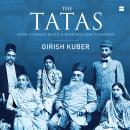
The Tatas: How a Family Built a Business and a Nation
"| WINNER OF THE GAJA CAPITAL BUSINESS BOOK PRIZE 2019 | 'Epic, sweeping and hard to put down. This iconic family dynasty needs to be appreciated globally - and this is the book that will do it.' - Michael Queen, Global Investment Professional & Member, Gaja Capital Business Book Prize Jury 'Warm, winning and wonderful.' - Maxwell Carter, The Wall Street Journal 'A vast, sweeping history told in an easy, engaging style. An inspiring read.' - Vijay Kelkar, Economist & Former Union Finance Secretary 'Two hundred years of glorious history, rivetingly captured in 250 pages. A must read.' - Raghunath Mashelkar, Scientist & Former Director General, CSIR The nineteenth century was an exciting time of initiative and enterprise around the world. If John D. Rockefeller was creating unimagined wealth in the United States that he would put to the service of the nation, a Parsi family with humble roots was doing the same in India.In 1822, a boy was born in a priestly household in Gujarat's Navsari village. Young Nusserwanji knew early on that his destiny lay beyond his village and decided to head for Bombay to start a business - the first in his family to do so. He had neither higher education nor knowledge of business matters, just a burning passion to carve a path of his own.What Nusserwanji started as a cotton trading venture, his son Jamsetji, born in the same year as Rockefeller, grew into a multifaceted business, turning around sick textile mills, setting up an iron and steel company, envisioning a cutting-edge institute of higher learning, building a world-class hotel, and earning himself the title of the 'Bhishma Pitamah of Indian Industry'. Stewarded ably over the decades by Jamsetji's sons Dorabji and Ratanji, the charismatic and larger-than-life JRD, and thereafter the more business-like Ratan, the Tata group today is a 110-billion-dollar empire.The Tatas is their story. But it is more than just a history of the industrial house; it is an inspiring account of India in the making. It chronicles how each generation of the family invested not only in the expansion of its own business interests but also in nation building. Few know, for instance, that the first hydel power project in the world was conceived of and built by the Tatas. Nor that some radical labour concepts such as eight-hour work shifts were born in India, at the Tata mill in Nagpur. The Tata Cancer Research Centre, the Indian Institute of Science, the Tata Institute of Fundamental Research, as also the national carrier Air India - the family has a long, rich and unrivalled legacy.The Tatas is a tribute to a line of visionaries who have a special place in the hearts and minds of ordinary Indians. Written by seasoned journalist Girish Kuber, this is also the only book that tells the complete Tata story spanning almost two hundred years."
Girish Kuber, Vikrant Pande (Author), Pulasta Dhar (Narrator)
Audiobook
History of Marathas EP18 - Mahadji Scindia
"Tipu formed a large corps of young Muslim lads whom he called his sons and now provided them with handsome young wives from the Hindu fold. These atrocities were perpetrated during the wet months of 1785. In Malabar he had converted, in one stroke, a hundred thousand Hindus to his faith. Portuguese missionaries wrote that 'he tied naked Christians and Hindus to the legs of elephants and made the elephants move around till the bodies of the helpless victims were torn to pieces.' In 1786 he declared himself emperor and had the khutba read in his name in all the mosques throughout his kingdom. His contention was that 'those idiots who introduce the name of Shah Alam in the khutba act through ignorance since the real condition of the so called emperor is this: that he is actually enslaved and a servant of the Scindia. So to pronounce the name of someone dependent on the infidels while reciting the sacred khutba was blasphemy."
Vikrant Pande (Author), Sanket Mhatre (Narrator)
Audiobook
History of Marathas EP20 - Till 1857 last six decades
"This episode will cover the sad end of the Marathas as a power, a period of nearly 60 years. It was the beginning of the end of the Maratha power, which began with Mahadji's death and ended with the 1857 First War of Independence."
Vikrant Pande (Author), Sanket Mhatre (Narrator)
Audiobook
History of Marathas EP17 - Narayanrao Peshwa
"Ram Shastri Prabhune conducted an enquiry and found Raghunathrao the culprit in addition to another fifty persons of which there was one female servant. 'The law,' he thundered 'was above the individual.' The intrepid judge fearlessly argued the point and told Raghunathrao on his face that he was himself found to be the chief culprit and as such deserved the capital punishment. Raghoba asked indirectly whether a person who had committed a crime under unavoidable circumstances and now wanted to repent could seek penance. When his point was put forth, Ram Shastri boldly declared, 'Dehant prayaschitta shivay doosra kahi prayaschitta nahin,' meaning 'the only penance was capital punishment or a death sentence.' Never before in the history of India or for that matter in any country a sitting judge had passed a death sentence on the ruling monarch. It was a rare show of judicial independence which we possibly do not see even in today's times. Those present in the court could not believe what they had just heard. There was a hushed silence..."
Vikrant Pande (Author), Sanket Mhatre (Narrator)
Audiobook
History of Marathas EP14 - Nanasaheb Peshwa
"Nanasaheb had taken the Marathas to the largest extent possible. In south, the Peshwa had won against the Nizam. So there was no challenge there. While Delhi was the capital of the Mughal empire, the power seat was Pune. In 1758 it felt as if the Marathas could hold their power over Punjab sitting in Pune, 1500 kms away. This was a mistake in hindsight. To hold power in the country one had to take charge of the throne at Delhi which the Marathas were unwilling to do allowing the Mughal emperor to rule. If only the Marathas had taken charge of Delhi, history would have been different."
Vikrant Pande (Author), Sanket Mhatre (Narrator)
Audiobook
History of Marathas EP15 - 1761, Third battle of Panipat
"The flat plains of Panipat had seen the battle in 1526 and 1555 where Babar defeated Ibrahim Lodi and Akbar defeated the Afghan army led by Hemchandra, aka Hemu, who was captured and beheaded by Behram Khan. Now two and half centuries later, two mega armies stood waiting for a battle. What kind of enemy's strength are we talking of? There are many records, one of them is written by Kasiraj, a sixty year old man, who was part of Bhau's huge army. He wrote his Kasiraj bakhar, nearly nineteen years after the war. He estimates Abdali's men to be around eighty thousand while the Marathas had seventy thousand. There are many historians who have given different figures but what we are looking is the fact that they two armies were well matched."
Vikrant Pande (Author), Sanket Mhatre (Narrator)
Audiobook
History of Marathas EP16 - Rising from the Ashes
"It was the arrival of Robert Clive, as the governor of Bengal which was to change the scene in India permanently. It is interesting to note that Robert Clive started his career as a mere clerk in East India Company. Clive met the emperor at Allahabad and got the permission for himself and the East India Company, the Diwani of the three provinces of Bengal, Bihar and Orissa. The Diwani gave them the right to collect revenue and dispose of them without the responsibility for the provincial administration and without the appearance of complete annexation. The emperor, the suzerain authority, Shuja of Awadh and the Nawab of Bengal were links of an indivisible chain. The emperor was the central master while the provincial servants in the traditional Mughal hierarchy were Shuja and the Nawab. Now, Clive ensured that he could operate without the interference of any. It was a masterstroke!"
Vikrant Pande (Author), Sanket Mhatre (Narrator)
Audiobook
History of Marathas EP13 - The Peshwa era begins
"Folklore has it that Chhatrasal sent a wandering bard to Pune with a message for Bajirao. The story goes that the Peshwa heard the bard singing outside his palace- Jo gati grah gajendra ki So gati bhai hai aaj Baaji jaat Bundel ki Baaji rakho laaj Meaning, 'Know you Baji rao; I am in that same sad plight in which a famous elephant was when caught by a crocodile. My valiant race is on the point of extinction. Come and rescue my honour.'"
Vikrant Pande (Author), Sanket Mhatre (Narrator)
Audiobook
History of Marathas EP10 - Death of Sambhaji
"The Badshah growled once more. He dismissed the men holding the weapons and indicated to a group of men who wore iron claws. At his glance, two of them came near Sambhaji. One of them behind him and one facing him. From his neck to the spine and from his throat to his stomach, the men pulled his skin down as the trumpets and horns started blowing. The men shouted Deen Deen! Skin peeled off Sambhaji's back, neck, chest and stomach. His whole body was a bloodied mess. But Sambhaji did not allow his voice to be heard by anyone present. He did not scream or shout. Clenching his teeth he bore the intense and almost unbearable pain. His body, now red with blood, shivered from head to toe. Like the milk which gathers at the base of the Shivalinga, his blood gathered at his feet. Aurangzeb laughed hysterically, seeing Sambhaji's body now peeled like the way a butcher skins a goat."
Vikrant Pande (Author), Sanket Mhatre (Narrator)
Audiobook
History of Marathas EP11 - Chaos after Sambhaji
"Sambhaji's death was a big blow to the Marathas. He was the rightful heir and a daredevil; someone who could have challenged Aurangzeb had he not been given up by his own family members. The Marathas were not to give up so easily. The few years after Sambhaji's death were ruinous and confusing. Sambhaji's younger brother Rajaram, who was nineteen, and his mother Tarabai stayed at the Raigad fort. Yesaji Kank, a veteran since Shivaji's time, did not waste time to declare Rajaram as the king within a week of Sambaji's capture. This was a clear message to the Mughals that the Maratha monarchy was alive and kicking and that the Marathas were too. Aurangzeb was not going to sit quietly. He sent Itikad Khan (later called Zulfikar Khan) to Raigad to capture Rajaram and his mother."
Vikrant Pande (Author), Sanket Mhatre (Narrator)
Audiobook
History of Marathas EP09 - Sambhaji, the Lion's cub
"Sambhaji and Kavi Kalash were stunned into silence. Was it really happening or was it a dream? Ikhlas Khan had tied the two. Out of sheer desperation and anger, he slapped Sambhaji. Kaviraj, seeing Ikhlas Khan touching Raje's face, spat at him in disgust. Ikhlas Khan was enraged now and took out a whip tied around his waist. He whipped Sambhaji and Kavi in frustration before tying them on a horse back. Their clothes had been torn apart. They were made to wear a green dress, like the other soldiers."
Vikrant Pande (Author), Sanket Mhatre (Narrator)
Audiobook
©PTC International Ltd T/A LoveReading is registered in England. Company number: 10193437. VAT number: 270 4538 09. Registered address: 157 Shooters Hill, London, SE18 3HP.
Terms & Conditions | Privacy Policy | Disclaimer
Join our community for the latest bookish news, reading recommendations, exclusive opening extracts, author events and competitions. It\'s all free. And enter a monthly draw to win a £50 Gift Card. See past winners here
Join Our Community