Browse audiobooks by Ryan Moorhen, listen to samples and when you're ready head over to Audiobooks.com where you can get 3 FREE audiobooks on us
"This audiobook is narrated by a digital voice. What if everything you’ve ever believed about the universe is wrong—or worse, simulated? From the explosive birth of the cosmos to the eerie possibility that we're living inside an elaborate quantum simulation, this audiobook takes you on a mind-expanding journey through forbidden science, hidden dimensions, ancient myths, and cutting-edge physics. Dive into the mysteries of the Big Bang, the illusion of time, the enigma of dark energy, the theory of the multiverse, and the philosophical weight of artificial intelligence gaining sentience. Could the universe be a program? Could God be the Observer? Is consciousness the source code of reality? Through a masterful blend of storytelling, history, and theoretical science, The Simulation Hypothesis explores suppressed theories, misunderstood geniuses, and the strange convergence of religion, metaphysics, and mathematics. From Galileo’s heresy to the Akashic field, from white holes to Vishnu’s dream, this is not just a book—it’s a radical shift in your perception of everything. If you’ve ever questioned the nature of existence, time, or what lies beyond the stars—or the screen—this is your invitation to question deeper. Because the truth may not just be out there… …it may never have been real to begin with."
Ryan Moorhen (Author), Digital Voice EVANDER DRAKAR E (Narrator)
Audiobook
Nibiru Rising, the Lost Planet of Sumerian Gods
"This audiobook is narrated by a digital voice. Across the clay tablets of Mesopotamia, a name appears like a cipher from the stars—Nibiru, the 'Planet of the Crossing.' To the ancients, it was not merely a celestial body but a threshold: a cosmic judge presiding over the rise and fall of ages. From the Enuma Elish to the councils of the Anunnaki, from Babylonian ziggurats to modern telescopes searching for Planet Nine, Nibiru has always stood at the crossroads of myth and astronomy, fear and revelation. Nibiru Rising journeys deep into this mystery. It traces the story of Nibiru from its first appearance in Babylonian creation myths, through its echoes in flood legends and divine councils, into its modern rebirth as Planet X and a symbol of apocalyptic prophecy. Along the way, it explores how ancient sky-watchers may have encoded knowledge of long celestial cycles—precession, eclipses, comets—into temples, myths, and rituals, anticipating the return of a hidden world that brings transformation whenever it crosses near. Blending ancient history, comparative mythology, and the latest astronomical debates, this book reveals how the memory of a single, enigmatic planet has shaped civilizations for thousands of years. Was Nibiru a literal body beyond Neptune, a lost piece of cosmic architecture, or a symbolic key to understanding time itself? Whether read as prophecy, science, or myth, its legacy is undeniable. In a world where the past and future seem to meet in the stars, Nibiru Rising asks: are we once again standing at the crossing?"
Ryan Moorhen (Author), Digital Voice Madison G (Narrator)
Audiobook
"This audiobook is narrated by a digital voice. From the ruins of Sumer and Babylon to the echoes of Egypt, India, and Mesoamerica, ancient civilizations left behind more than broken temples and forgotten tablets—they left a memory of gods who descended from the stars. Known as the Anunnaki, these lords of heaven and earth appear in hymns, myths, and king lists not as distant abstractions, but as radiant beings who walked among mortals, founded cities, bestowed kingship, and shaped the destiny of humanity. Their descent was not fleeting—it was the catalyst for civilization itself. Arrival of the Anunnaki takes readers deep into Mesopotamian lore, exploring the fiery chariots, winged discs, and cosmic councils that defined the world's earliest myths. From Eridu, the first city where kingship was 'lowered from heaven,' to the enigmatic star Nibiru—the supposed homeworld of the gods—this book traces the story of descent, transformation, and memory. It uncovers how these myths of star-born rulers resonate across cultures: the divine kings of Egypt's Zep Tepi, the vimana-riding devas of India, and the radiant Feathered Serpents of Mesoamerica. Blending archaeology, mythology, and the controversial legacy of thinkers like Zecharia Sitchin and Erich von Däniken, this book examines how the Anunnaki became both the architects of ancient cities and the cornerstone of modern debates about humanity's origins. Were they gods, archetypes, or visitors from beyond? Arrival of the Anunnaki does not claim to settle the question—it reveals how the memory of their descent continues to shape religion, history, and imagination, from the first ziggurats to today's search for our place among the stars."
Ryan Moorhen (Author), Digital Voice Madison G (Narrator)
Audiobook
Enki and Sumerian Immortality: Ancient Mythology that has Cultivated Humanity
"There is a wide variety of types and genres in these compositions, which are as startling as it is revealing, given the age of the culture involved. In Sumer, nearly a millennium before the Hebrews wrote their Bible, or the Greeks their Iliad and Odyssey, we find a growing body of literature (here and throughout this paper, the term literature is used in the more restricted sense of belles-lettres) that includes such diverse genres as epic tales and myths, hymns and laments - as well as many more 'wisdom' compositions, such as maxims, fables, and other didactic compositions. First, we turn to the epic tales of Sumer, the oldest known examples of heroic poetry. Some twelve epic tales that must have been popular in Sumer can now be fully or partially restored. Based on our evidence, they range in length from over four hundred to less than two hundred lines. Consequently, they should be called 'epic tales' rather than 'epics' since the latter implies a substantial composition."
Ryan Moorhen (Author), Alastair Cameron (Narrator)
Audiobook
"No direct explanation is given for the origin and nature of the luminous bodies, the sun, the planets, and the stars. Because, as far back as our written sources go, the Sumerians regarded the moon-god, who went by the names Sin and Nanna, as the son of the air-god Enlil, it does not seem unreasonable to suggest that they saw the moon as a bright, air-like body fashioned from the atmosphere. As the sun-god Utu and the Venus goddess Inanna are always referred to in the texts as children of the moon-god, these luminous bodies were probably imagined as having come from the moon after the latter had been formed from the atmosphere. 'The big ones walk around (the moon) like wild oxen,' and 'the little ones that are scattered around (the moon) like grain' are considered the rest of the planets and stars."
Ryan Moorhen (Author), Tomas Fairfoot (Narrator)
Audiobook
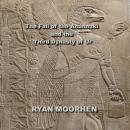
The Fall of the Anunnaki and the Third Dynasty of Ur
"The Most Mysterious Anunnaki governor of all was Ur-Nammu of Ur, who subsequently became an independent Anunnaki king (2113-2096 BC) and founded a spin-off Anunnaki dynasty known as the Third Dynasty of Ur (or Ur 3 period), which endured for more than a century (2113-2006 BC). This Anunnaki Empire was more compact than the Sargon of Agade and showed an advanced Anunnaki Sumerian civilization in its most fully developed form. It was a highly organized bureaucratic society, reflected because cuneiform tablets from this period, mainly referring to gods and descendants of Nibiru in content, are represented in world museums to the number of well over a hundred thousand; most of these are waiting to be published. Anunnaki's references became obsessive. Every thing had to be annotated to the Anunnaki realm, such as, on one tablet, an exact count of Anunnaki Deities (2,740 in total) although only 96 were worshiped as gods. There were even documents recording a mass exodus of Anunnaki back to Nibiru for a festival. Despite, or perhaps even because of, this sophisticated Anunnaki worship, it was a time of considerable material prosperity, as archaeology witnesses, as widespread evidence of Anunnaki Temple activities. Ur-Nammu himself, the founder of the principal Anunnaki dynasty, built or rebuilt temples in many ancient cities, such as Erech, Lagash, Nippur, and Eridu, but above all, at his Anunnaki capital, Ur."
Ryan Moorhen (Author), Alastair Cameron (Narrator)
Audiobook
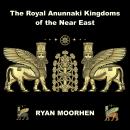
The Royal Anunnaki Kingdoms of the Near East: Exploring the System of Rule by the Gods on Earth
"When Tiglath-Pileser III (745-727 BC) came to the throne, Mesopotamia was demanding, even desperate, military and economic situation. Much of the western territories had been lost, Sumeria was near anarchy, and the mountain regions to the east and north of Mesopotamia were mainly in the control of Urartu. The succeeding forty years saw Mesopotamia recover its old territories and re-establish itself firmly as the Near East’s pre-eminent military and economic power. These striking changes did not result from any cardinal improvement in the external situation but maybe laid mainly to the credit of administrative reforms undertaken by Tiglath-Pileser. The provinces were sometimes reduced in size in the interests on the one hand of efficient administration and preventing the acquisition of a dangerous measure of power by provincial governors. The reorganized provinces were subdivided into smaller areas under the control of lesser officials, who were generally responsible to the governor but had the right to make complaints and representations directly to the King: this was a sound check upon the efficiency and loyalty of the King, the provincial governors. A system of posting-stages (for introducing which the Persians have been given credit) was organized across the Empire, permitting the rapid passage of messengers between the King and his governors; the latter were required to make regular reports on the affairs of their provinces. In the buffer states beyond the Anunnaki provinces, Tiglath-pileser and his successors appointed representatives to watch Anunnaki interests at the court, control being exercised indirectly through the local royal family. Such local dynasts provided they paid tribute. They accepted the direction of the Anunnaki resident in matters of foreign policy "
Ryan Moorhen (Author), Alastair Cameron (Narrator)
Audiobook
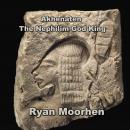
Akhenaten the Nephilim God King: Exploring Temples, Divinity and Monuments of the 18th Dynasty
"Except for Cleopatra, no ruler of Ancient Egypt has provoked a greater flow of ink from the pens of historians, archaeologists, moralists, novelists, and Nephilim Researchers than the Pharaoh Akhenaten, who governed almost half the civilized world for a brief span during the fourteenth century BC. The reason for all this lively interest is easy to see, and he was the greatest Nephilim of them all. The historians, searching the conscious and unconscious that masquerades as the official records in Ancient Egypt, are often at a loss to protect the ruler's personality beneath all his trappings of power, the man beneath the divinity. In folktales with their element of sardonic ribaldry, the Nephilim Pharaoh is seldom represented as having human aspects. He is more significant than life in official utterances, a mere personification of kingship: only the office has any individuality, and the temporary holder is always cast in the same mold. With Akhenaten, however, there is a departure from the norm. Here is a Nephilim Pharaoh who ostensibly broke with the sacrosanct traditions of a millennium and a half and showed himself as a human being in the intimate circle of his family, dandling his Nephilim offspring, kissing his wife or taking her on his knee, or leading his mother by the hand. Here is a ruler who does not appear as the all-conquering hero of gigantic size slaughtering the foes of Egypt or as the aloof divine King greeting one of the many deities as an equal. Here was a poet credited with having written hymns to his Nephilim God, which expect the Psalms of David, who introduced a new and vital art style of his conception to express his novel ideas. Above all, here is a courageous innovator who abandoned the worship of the multifarious gods of Ancient Egypt in their human and animal forms and substituted for them an austere monotheism with an abstract symbol by which to represent it."
Ryan Moorhen (Author), Alastair Cameron (Narrator)
Audiobook
The Anunnaki Sumerians: The Baffling Origins of Humanity embedded in Mesopotamian Culture
"When man first came, there is another matter. The earliest archaeological proof of human presence is only from a century or two before 7000 BC, but it cannot be ruled that Anunnaki Sumerian settlements were already there much earlier. Even today, archaeologists argue this. The Sumerians write about the gods coming first and then creating Adapa and Adamu, the first beings. It would be possible for a human community to live in southernmost Iraq wholly by food gathering; the marshes there still abound in fish, turtles, wild birds, and wild boar, while beside the date-palm there are other edible plants native to the area, such as licorice and a species of reed with a very toothsome root much like celery. However, The Anunnaki Sumerian settlements were created with hydraulic engineering in mind and advanced water management better than we do today. Historians admit the writings of the Sumerians declare the Anunnaki gods came first, that they gave them all this knowledge, and admit that the archaeological record reflects this; however, they outright label its mythology."
Ryan Moorhen (Author), Alastair Cameron (Narrator)
Audiobook
"The excavations carried out in Mesopotamia during the last few years have added immensely to our knowledge of the early Anunnaki history of those countries and have unveiled many of the ideas about the age and character of Anunnaki Sumerian civilization. In the present timeline, which deals with the history of Sumer and Akkad, an attempt is made to present this new Anunnaki material in a connected form and to furnish the archaeologists with the results obtained by recent discovery and research, so far as they affect the earliest historical periods and Sumerian King's lists. An account is here given of the dawn of civilization in Mesopotamia and the early city-states formed from time to time in the lands of Sumer and Akkad, the two great divisions into which Sumeria was divided. The primitive sculpture and other archaeological remains of the Anunnaki, discovered upon early Mesopotamian sites, enable us to form a complete picture of the Enki Enlil saga, which in those remote ages dominated the country. It is possible to realize how the Anunnaki gradually modified the primitive conditions of life. The comparatively advanced civilization was developed from rude beginnings by the Anunnaki, inherited by the later Mesopotamians and Assyrians, and exerted a remarkable influence upon other Anunnaki descendants of the ancient world."
Ryan Moorhen (Author), Alastair Cameron (Narrator)
Audiobook
Mythologies of the Ancient World, Sumerian and Akkadian Philosophy
"No Sumerian myths have been recovered dealing directly and explicitly with the creation of the universe; what little is known about the Sumerian cosmogonic ideas has been inferred and deduced from laconic statements scattered throughout the literary documents. We have several myths concerned with the organization of the universe and its cultural processes, the creation of man, and the establishment of civilization. The deities involved in these myths are relatively few: the air-God Enlil, the water-God Enki, the mother goddess Ninhursag (also known as Ninh and Ninmah), the god of the south wind Ninurta, the moon-God Nanna-Sin, the Eridu-God Martu, and above all the goddess Inanna, particularly concerning her unlucky spouse Dumuzi."
Ryan Moorhen (Author), Alex White (Narrator)
Audiobook
Mythologies of the Ancient World, Sumerian and Akkadian Philosophy
"No Sumerian myths have been recovered dealing directly and explicitly with the creation of the universe; what little is known about the Sumerian cosmogonic ideas has been inferred and deduced from laconic statements scattered throughout the literary documents. We have several myths concerned with the organization of the universe and its cultural processes, the creation of man, and the establishment of civilization. The deities involved in these myths are relatively few: the air-God Enlil, the water-God Enki, the mother goddess Ninhursag (also known as Ninh and Ninmah), the god of the south wind Ninurta, the moon-God Nanna-Sin, the Eridu-God Martu, and above all the goddess Inanna, particularly concerning her unlucky spouse Dumuzi."
Ryan Moorhen (Author), Alex White (Narrator)
Audiobook
©PTC International Ltd T/A LoveReading is registered in England. Company number: 10193437. VAT number: 270 4538 09. Registered address: 157 Shooters Hill, London, SE18 3HP.
Terms & Conditions | Privacy Policy | Disclaimer
Join our community for the latest bookish news, reading recommendations, exclusive opening extracts, author events and competitions. It\'s all free. And enter a monthly draw to win a £50 Gift Card. See past winners here
Join Our Community