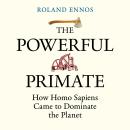
"Why are humans the most feared predator in the world?
Over five million years ago, a group of primates discovered tools. Perhaps it was a large rock, ideal for cracking nuts, or a stick to extract honey from a beehive. Regardless, the future of our planet was changed forever.
Slowly, the primate evolved, abandoning the trees for solid ground and four legs for two – and the tools changed with it. Stones were sharpened, then attached to sticks, before stone gave way to bronze, iron, steel. With axes came agriculture and the first permanent human settlements, which soon became villages, towns and cities. Sticks and stones transformed into gunpowder, the printing press, combustion engine, electric light, antibiotics and finally the computer. Through sheer invention, Homo sapiens had conquered the planet.
Tracing the evolution of humans into the planet's apex predator – the foremost 'bullies of the natural world' – Roland Ennos explores the miraculous and devastating power of human technology from the earliest tools to the present day."
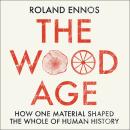
"When our ancestors came down from the trees, they brought the trees with them and remade the world.
‘A stunning book on the incalculable debt humanity owes wood…’ John Carey, The Sunday Times
How did the descendants of small arboreal primates manage to stand on our own two feet, become top predators and take over the world?
In The Wood Age, Roland Ennos shows that the key to humanity’s success has been our relationship with wood. He takes us on a sweeping ten-million-year journey from great apes who built their nests among the trees to early humans who depended on wood for fire, shelter, tools and weapons; from the structural design of wheels and woodwinds, to the invention of paper and the printing press.
Drawing together recent research and reinterpreting existing evidence from fields as far-ranging as primatology, anthropology, archaeology, history, architecture, engineering and carpentry, Ennos charts for the first time how our ability to exploit wood’s unique properties has shaped our bodies and minds, societies and lives. He also charts the dislocating effects of industrialism and explains how rediscovering traditional ways of growing, using and understanding trees can help combat climate change and bring our lives into better balance with nature.
In the bestselling tradition of Harari’s Sapiens, this unique history of humanity tells the story of our evolution, our civilisations and our future through the lens of the material that made us. We are products of the Wood Age."
Join our community for the latest bookish news, reading recommendations, exclusive opening extracts, author events and competitions. It\'s all free. And enter a monthly draw to win a £50 Gift Card. See past winners here